
Main Article Headline |
Article Sub Headline |
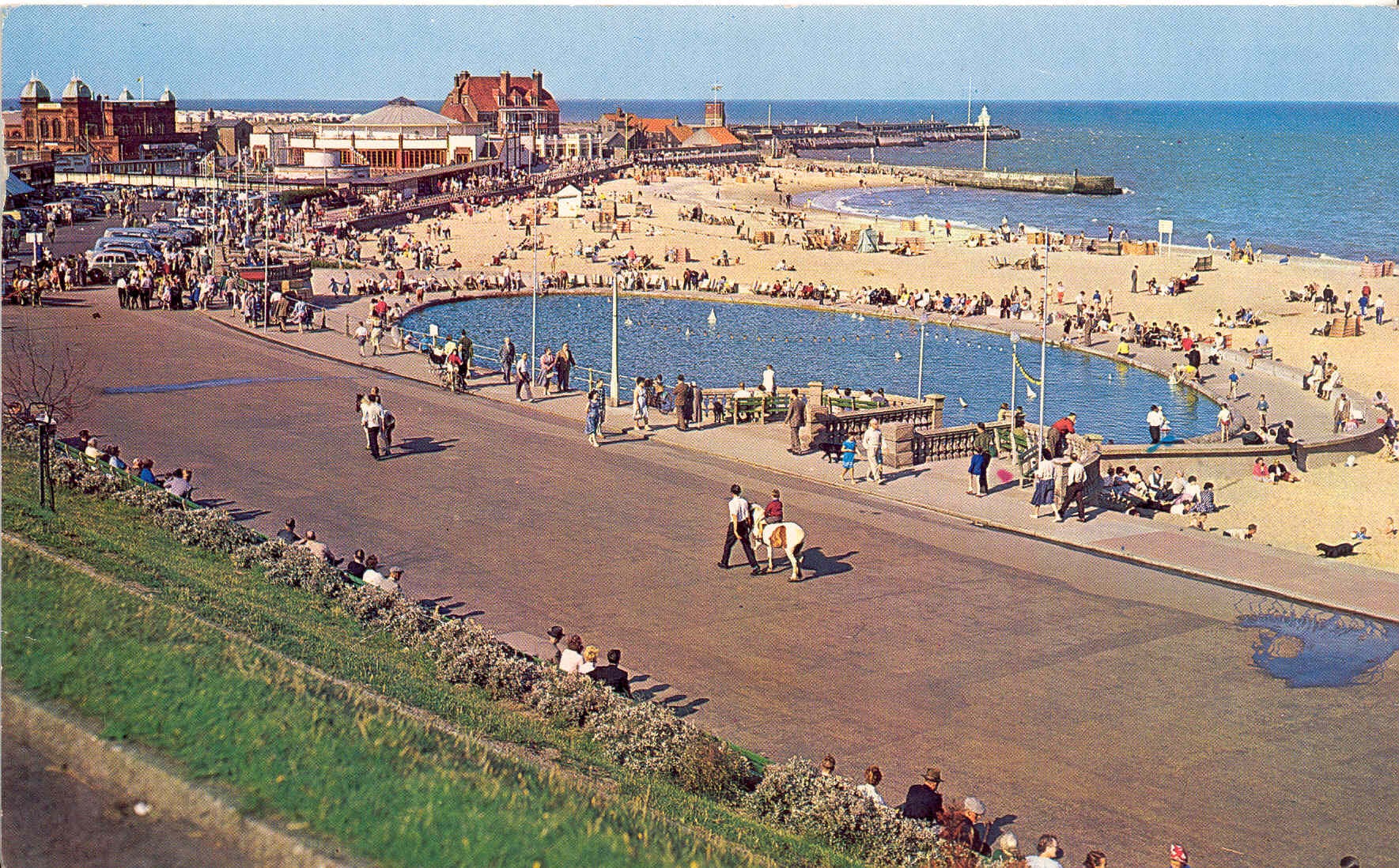
Ask a teenager to imagine a Norfolk beach day in the 1970s and the strangest bit might not be the clothes or the cars. It might be the freedom.
One local recollection describes children being left to play on Great Yarmouth beach after doing their chores, with jam sandwiches, lemonade made from crystals and a hole in the sand to keep them busy.
They swam most days, sheltered under the jetty when it rained and eventually made their own way home.
That is one person’s memory, not proof that every Norfolk child had the same summer.
But it is a revealing place to start. The ordinary details are the ones that now sound most extraordinary.
A beach day with very little hovering
Audrey Ward’s recollection, preserved by the Our Great Yarmouth community-history project, paints a picture of a seaside holiday built around long stretches of unsupervised play.
Adults were present, but they were not necessarily standing beside the water with a phone, checking the time or arranging the next activity.
The day had its own rhythm: a packed lunch, swimming, digging, sheltering from rain and finding your way back later.
There was no live location to share and no quick message to say plans had changed.
If you were old enough to be trusted, you were simply out for the day.
That does not automatically make the past better.
Children’s experiences varied hugely by family, age, confidence and income.
Some would have had far less freedom.
Still, the expectation has clearly shifted.
Today, a child disappearing for hours on a busy beach would raise a very different set of worries.
Holiday accommodation meant fetching your own water
Another Great Yarmouth memory comes from South Denes Caravan Park, where one family stayed from 1973 onwards.
The recollection includes fetching water from a standpipe, emptying buckets beneath the caravan and using shared toilet blocks.
For a teenager used to en-suite bathrooms, hot showers and holiday accommodation judged by its Wi-Fi, that may sound less like a break and more like a challenge on a television programme.
Yet this was not presented as an unusual adventure. It was simply how that holiday worked.
The caravan was a base, the site facilities were shared and a trip to the standpipe was part of the routine.
The change is not only about comfort. It shows how holiday expectations have moved.
A family break once involved accepting a fair amount of inconvenience in exchange for being near the beach.
Now, people often compare facilities before booking and expect the basics to be ready when they arrive.
Great Yarmouth was the destination, not just a stop
Mandy Melbourne’s memories include annual train journeys from the Midlands to Great Yarmouth, guesthouse stays, trips to Scroby Sands and beach holidays that returned year after year.
Other recollections describe the familiar seaside mix: piers, theatres, fairground rides, cinemas and boat trips.
For many families, the resort itself was the entertainment.
You did not need to fill every quiet moment with a new screen, a booked experience or a long-distance flight.
The same seafront could provide the day’s plan, and the holiday often followed a well-worn pattern: arrive, settle in, go to the beach, walk the front and choose what to do next.
The train journey is striking too.
A trip to Great Yarmouth could feel like a major annual event, with the destination reached by rail and the holiday concentrated in one place.
Modern families may travel further and book more easily, but the journey and the resort no longer carry quite the same weight for everyone.
On the Broads, the boat was the entertainment
Norfolk’s summer memories were not all about the seafront.
Archive material from a 1973 Broads boating holiday records a hired motor cruiser costing about £79 for a week, travelling around places including Acle, Coltishall, Stalham, Beccles and Loddon.
There was no digital entertainment to fall back on if the weather turned dull or the scenery became familiar.
The boat, the waterway and the people on board were the holiday.
Someone had to steer, someone had to moor and everyone had to find a way to fill the hours.
That kind of break now sounds wonderfully simple, or faintly alarming, depending on your view of family holidays.
It also shows how much leisure has become organised around convenience, choice and constant stimulation.
Norfolk’s archives preserve more than big events.
Norfolk County Council’s photographic-collections guide points to images of Great Yarmouth and everyday Norfolk life from the 1950s, 1960s and 1970s, including large collections by Clifford Temple and photographs held by Great Yarmouth Borough Council.
Those records sit alongside personal memories, and together they offer something more valuable than a perfect nostalgia story.
They show how normal life once worked: where children went, how families travelled, what counted as a treat and how much discomfort people accepted without calling it a problem.
So the most surprising memory may be the least dramatic one: being sent to the beach with lunch, told to be back later and trusted to manage the day.
What ordinary Norfolk summer memory from the 1970s would surprise someone today?
Tell us the place and the routine a beach, caravan site, train journey, village fete or Broads trip and we may use those recollections in a follow-up. |
0 Comments
Join the conversation
Be the first to comment
Share your thoughts above.