
Hosepipe Ban: Can You Rescue A Brown Norfolk Lawn Or Should You Just Leave It Alone? |
The practical answer for Norfolk gardeners while Anglian Water restrictions are in force. |
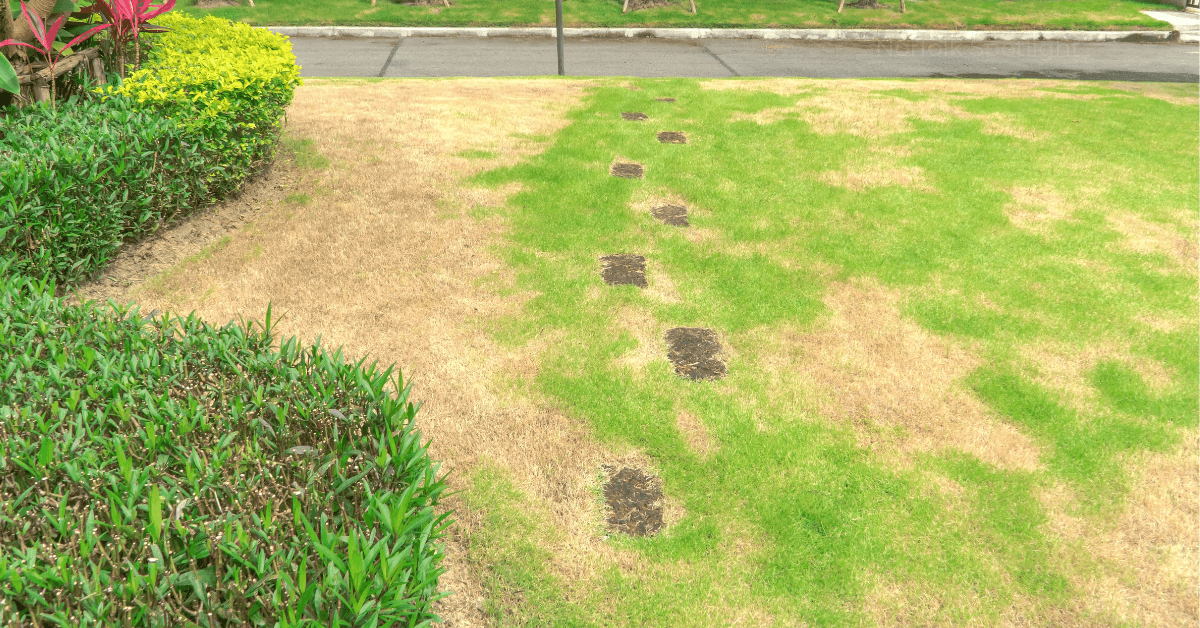
There is a point in every hot summer when the lawn stops looking “a bit dry” and starts resembling something a lion should be walking across.
The temptation is obvious: buy seed, feed, moss killer, lawn tonic, a sprinkler attachment and perhaps one of those mysterious bottles promising instant green.
But during the current dry spell, the best lawn treatment may be to leave the grass alone.
For Norfolk households supplied by Anglian Water, a Temporary Use Ban commonly called a hosepipe ban came into force at 1.01am on Saturday 11 July 2026.
The restriction applies across Anglian Water’s region, apart from its Hartlepool supply area.
Anglian Water says customers can still water gardens using a watering can or bucket, but should not use a hosepipe for ordinary garden watering.
That makes the timing awkward for anyone staring at a brown lawn.
The good news is that brown does not automatically mean dead.
The short answer: established grass is often dormant
The Royal Horticultural Society says that, during hot, dry weather, an established lawn can turn brown and stop growing while its underlying roots remain alive.
Once rain returns and conditions improve, it can send up fresh green leaves.
In other words, a brown lawn may be protecting itself rather than asking for an emergency makeover.
This is particularly true of an ordinary domestic lawn.
The RHS notes that lawns containing fescue grasses tend to be more robust in dry conditions, while very close-cut, formal lawns with fine grasses can suffer more quickly.
So before buying anything, look at the pattern.
Is the whole lawn gradually straw-coloured after weeks of heat?
That points towards drought stress or dormancy.
Are there sharply defined patches, areas beneath trees, or sections that remain dead-looking after rain?
That may suggest a separate problem such as compacted or water-repellent soil, pests, disease or damaged roots.
You might be wondering should I water a brown lawn with a watering can?
Usually, not if it is an established lawn.
The RHS specifically advises resisting the temptation to water established lawns during summer, however brown they become.
Under hosepipe restrictions, using drinking water to chase a green appearance is also difficult to justify when the grass may recover naturally after rainfall.
There is an important exception: newly sown grass or recently laid turf.
New lawns have shallower, less established roots and may need watering to survive.
The RHS advises using stored rainwater or suitable grey water where possible, and following the water company’s current restrictions and exemptions rather than assuming a watering can makes every situation acceptable.
What to do this week
1. Raise the mower height
If the grass is still growing, mow less often and set the blades higher.
Longer grass shades the soil and helps reduce moisture loss. Close mowing in dry conditions can weaken the lawn further.
If growth has stopped, stop mowing. There is no prize for scalping dormant grass.
2. Leave short clippings on the lawn
Where the mower is cutting lightly and the clippings are small, let them fall back into the grass.
The RHS says they can act as a mulch and return nutrients as they break down.
Do not leave thick clumps that smother the surface.
3. Avoid feed and weedkiller for now
A drought-stressed lawn is not the place for a scattergun treatment programme.
The RHS advises avoiding lawn weedkiller or fertiliser on drought-affected turf in autumn, delaying treatment until spring if it is still needed and the grass is growing vigorously.
Applying fertiliser during severe heat can waste money and add stress.
Weedkiller can also affect grass that is already struggling.
4. Keep traffic sensible
Try not to drag heavy furniture across crispy grass or use the lawn as a shortcut when the soil is baked hard.
Dormant turf is tougher than it looks, but repeated wear can turn thin areas into bare patches.
5. Wait before repairing
Autumn is the useful window for lawn recovery work.
Once temperatures ease and there is enough moisture, inspect thin areas, aerate compacted ground and reseed sparse patches.
The RHS suggests choosing a drought-tolerant seed mix for repairs.
That is the moment to spend money when seed can germinate and roots can establish rather than scattering it onto dry ground in the middle of a restriction period.
When brown grass really may be dead
Dormancy is not guaranteed. Severe or prolonged drought can weaken grass and damage roots, particularly where the lawn was already thin, compacted or poorly rooted.
A lawn that fails to show new growth after proper rainfall deserves closer inspection.
The RHS also warns that sparse lawns can give weeds and moss an opportunity to move in when conditions improve.
That does not mean you need to reach for every treatment immediately.
It means you should reassess once the lawn is actively growing again.
The Norfolk brown-lawn recovery checklist
Save this before buying another lawn product:
• Is the browning general, or limited to distinct patches?
The practical verdict is reassuringly unglamorous: for most established Norfolk lawns, the smartest summer rescue is patience.
Let the grass go brown, protect it from extra stress and plan repairs for autumn if it does not recover.
A green lawn may look healthier.
In a hosepipe ban, however, a resting lawn may be the healthier decision for your garden, your wallet and the region’s water supply.
Resources
1. Hosepipe restrictions
2. Dry weather and drought in England: 2 to 9 July 2026 3. RHS Advice Lawn care for drought
Continue Reading
Silence At Sandringham: What Happens Next? The Five-Minute Check Before A Norfolk Summer Drive £250,000, £350,000 Or £500,000: What Does Your Money Actually Buy In Norfolk? |
0 Comments
Join the conversation
Be the first to comment
Share your thoughts above.