
Main Article Headline |
A lower asking price can seem persuasive until the extra commuting, school-run mileage and second-car costs are put on the same page. |
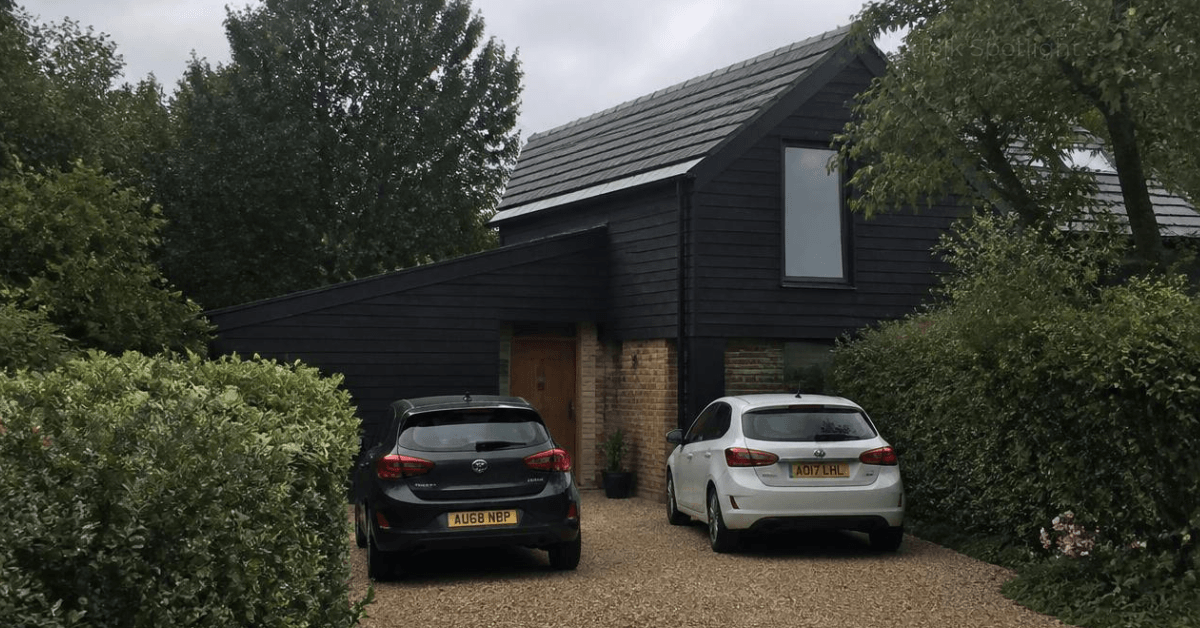
The cheaper house is often the one with the longer journey attached.
That matters in Norfolk, where moving further from Norwich can mean more miles to work, school, supermarkets, stations and medical appointments.
A home that saves money on the listing price may quietly add a second car, more fuel, more servicing and less flexibility when one vehicle is unavailable.
The key question is not simply, “How much cheaper is the house?” It is: “How much cheaper is the whole household budget after we live there?”
A current Norfolk comparison
As a live-market illustration checked on 16 July 2026, a three-bedroom semi-detached house on Mount Pleasant in Norwich was listed at £475,000. A three-bedroom semi-detached home on Heartsease Road in Thetford was listed at £250,000 to £260,000.
These are not valuations, and the homes are not identical.
They are a useful reminder of the price gap a buyer may see when comparing a more central location with a smaller Norfolk market town.
The Thetford listing was advertised with a garage and driveway; the Norwich listing was in the Golden Triangle area.
Both listings can change or be withdrawn, so treat them as snapshots rather than promises.
On the face of it, the Thetford option is more than £200,000 cheaper. That is a substantial difference. Transport costs will not automatically wipe it out.
But the monthly cash-flow effect can still be large enough to change whether the move feels affordable.
The five-minute household scenario
To make the maths transparent, imagine a household choosing between a Norwich home and a rural-edge or market-town home in Thetford.
Assume one adult travels 30 miles each way to work from Thetford, five days a week, for 230 working days a year.
Assume the second adult or a regular school-and-activity run adds 10 miles each way on the same number of days.
That produces 18,400 household miles a year before weekend trips, shopping, appointments or holidays.
For the Norwich option, use an illustrative eight-mile commute for the first adult and a three-mile daily run for the second.
That produces 5,060 miles a year under the same assumptions.
HM Revenue and Customs’ approved mileage rate for cars and vans is 55p per mile for the first 10,000 business miles in the 2026–27 tax year.
It is not a household price list or an insurance quote, but it is a useful all-in planning benchmark because it is intended to reflect more than fuel alone.
Using it as an illustrative proxy gives:
• Thetford scenario: about £10,120 a year
That £611 is not a prediction.
Your mileage, car, fuel economy, insurance, parking and maintenance could produce a very different result.
A smaller petrol car may reduce fuel use. A remote-working arrangement may remove several commuting days. A train commute, lift-sharing or a reliable school bus may change the calculation again.
But the exercise exposes the cost people often leave out: the price of being unable to combine journeys.
When the second car becomes the real cost
The second car is not just its purchase price. It may bring another insurance policy, vehicle tax where applicable, MOTs, tyres, servicing, breakdown cover, repairs, depreciation and finance payments.
Those fixed costs arrive even in a month when the car barely moves.
The rural household may also need two cars because the timetable does not line up.
One adult leaves early for work. The other handles school, clubs, shopping or an appointment.
Norfolk County Council’s transport tools allow residents to check local bus, rail, dial-a-ride and community car options by postcode, but availability is address-specific.
A bus route that looks close on a map may not work for a 7.30am start or an after-school collection.
That is why “Could we manage with one car?” should be a question asked before the offer, not after completion.
Check the actual school, workplace and shopping journeys at the times you will travel.
Check the last bus home. Check what happens when a vehicle is being repaired.
So, when does the cheaper home stop being cheaper?
With a price gap of more than £200,000, transport alone is unlikely to cancel out the entire purchase-price difference.
On the illustrative figures above, even ten years of additional travel would total about £73,000 before allowing for changes in fuel prices, wages, house prices or vehicle costs.
The more realistic warning is narrower: the cheaper home can stop feeling cheaper when the extra travel turns a manageable one-car household into a two-car household, or when the added monthly cost pushes the family into higher borrowing, less saving and more financial risk.
Would one car genuinely work from the address you are considering?
If the answer depends on perfect timetables, no breakdowns and no late finishes, price the second car before comparing the houses.
USEFUL RESOURCES
2. Properties For Sale in Thetford — 3 Bedroom Houses 3. Travel — mileage and fuel rates and allowances 4. Find Your Community Transport
Continue Reading
Silence At Sandringham: What Happens Next? The Five-Minute Check Before A Norfolk Summer Drive £250,000, £350,000 Or £500,000: What Does Your Money Actually Buy In Norfolk? |
0 Comments
Join the conversation
Be the first to comment
Share your thoughts above.