The Survey Result That Should Make You Walk Away |
A red tick is not automatically a deal-breaker. The real question is whether the problem is understood, costed and acceptable to you. |
A house survey is not a pass-or-fail certificate.
It is a snapshot of what the surveyor could see on the day, with warnings about defects, maintenance and areas that need more investigation.
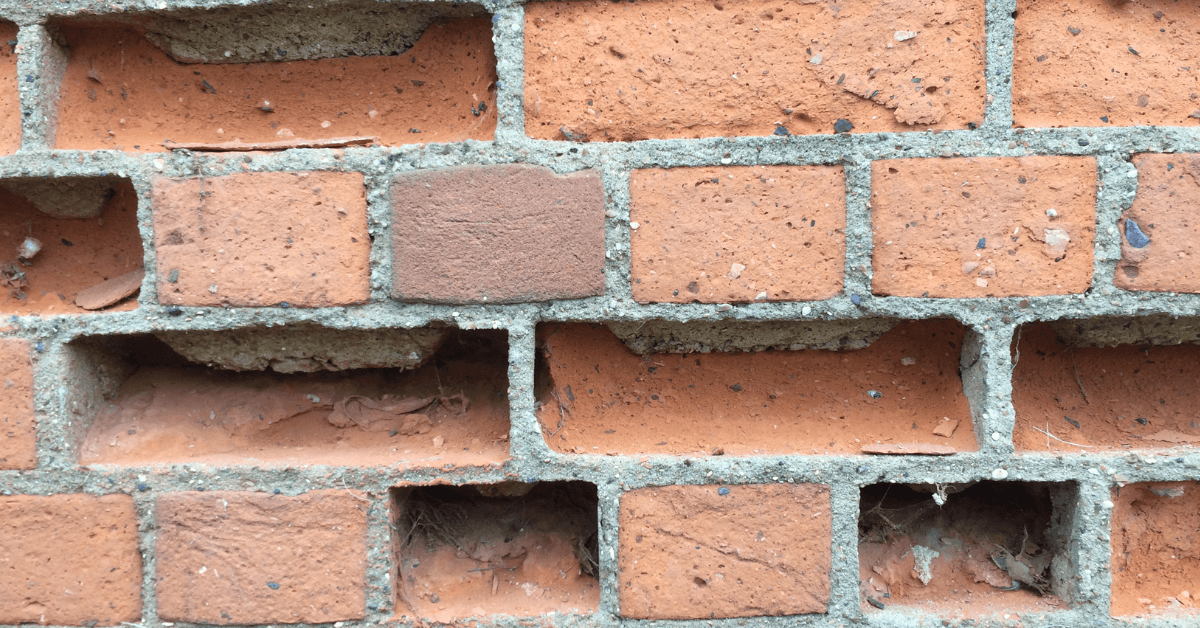
That distinction matters. A cracked path, tired pointing or an ageing kitchen may be irritating and expensive.
A movement-related crack, unsafe roof structure or unresolved damp problem can change the purchase altogether.
The difficult bit is separating one from the other.
What the survey rating really tells you
RICS reports commonly use condition ratings. In broad terms, a rating of 1 means no repair is currently needed; rating 2 means repairs or replacement are needed but the issue is not considered serious or urgent; rating 3 means the defect is serious, urgent or should be investigated promptly.
A rating 3 should not be treated as an automatic instruction to walk away.
It is a signal to stop, understand the problem and obtain proper evidence before becoming legally committed.
RICS advises buyers to get written quotations for serious repairs and to investigate further where the surveyor could not establish the full extent of a defect.
That is the first useful rule: do not negotiate from a colour alone.
Negotiate, investigate or withdraw based on the likely consequence.
When renegotiation may be the sensible option.
Renegotiation is most straightforward when the problem is visible, limited and reasonably able to be accurately costed.
Examples might include a roof covering approaching the end of its serviceable life, defective rainwater goods, failed external finishes or repairs to windows and doors.
These may still need attention, but the question is usually whether the price reflects the work and whether you have enough money left to do it properly.
Ask for at least two written quotes from suitably experienced contractors.
Check whether the work needs planning permission, Building Regulations approval, scaffolding, specialist materials or follow-up repairs.
A low initial quote can become a very different project once access is opened up.
You should also ask whether the defect is historic and stable, or active and worsening. That difference may matter more than the headline cost.
When further investigation is the right next step
“Further investigation recommended” means the surveyor has not been able to assess the issue fully. #
The reason may be concealed construction, restricted access or the need for specialist knowledge.
It is not a polite way of saying “probably fine”. Nor does it prove that the worst-case scenario is present.
The report should explain what is affected, why more investigation is needed, when it should happen and what type of professional may be appropriate.
Depending on the problem, that could mean a structural engineer, roofing specialist, damp or timber specialist, drainage contractor, electrician or another suitably qualified person.
The important question for the seller is whether the necessary access will be allowed before exchange of contracts.
If floor coverings, boxing-in, wall finishes or other parts of the building need to be disturbed, agree who will arrange this and who will pay.
Do not accept a vague promise that the issue can be sorted after completion unless you are genuinely willing to own that uncertainty. The findings that deserve the most caution
Structural movement is one obvious category.
Cracks are not all equal, and a survey cannot diagnose every cause from appearance alone.
The concern rises when cracking is accompanied by distortion, sticking doors or windows, sloping floors, movement around openings, failed repairs or a recommendation for specialist assessment.
Persistent damp is another.
A damp reading or patch of staining is not, by itself, a diagnosis. The source could be plumbing, rainwater, ground levels, ventilation, condensation or a defect in the building fabric.
The danger is buying a house where the cause has not been established, then discovering that cosmetic work has hidden a larger problem.
Roof and chimney defects can also move quickly from maintenance to major expenditure, particularly where water has reached timbers or ceilings.
Electrical, gas and drainage concerns deserve specialist attention because a general survey is not a substitute for testing by the right professional.
Finally, look hard at anything that could affect safety, insurability, mortgageability or future resale.
A defect may be physically repairable but still be a poor purchase if the repair is uncertain, unaffordable or likely to be difficult to insure.
Why Norfolk context matters
Norfolk is not one uniform housing market or one uniform risk area. But location can alter the questions you need to ask.
For homes near the North Norfolk coast, the district council advises prospective buyers to consider the potential impact of coastal change and expects solicitors to raise questions during the pre-contract process.
Norfolk County Council also identifies flooding and coastal erosion as significant county risks.
That does not make a coastal property automatically unsuitable. It does mean that a survey should sit alongside checks on flood risk, coastal policy, insurance and the property’s long-term position.
The same principle applies inland: a local concern is not proof of a defect at every address.
Ask about the actual property, its history and the evidence available for that site.
The walk-away test
Consider walking away when the central risk remains unknown after reasonable investigation, when specialist advice identifies serious work that you cannot fund, or when the property’s safety, insurance or resale position no longer fits your plans.
Also pay attention to the behaviour around the problem.
Pressure to exchange before investigations are completed, refusal to provide access, missing paperwork or repeated cosmetic repairs should make you more cautious.
None proves wrongdoing, but each increases uncertainty.
Before deciding, ask yourself five questions:
1. What exactly is defective, and what evidence supports that conclusion?
If you cannot answer those questions, you are not yet in a strong position to renegotiate or to proceed with a sale.
Save these survey questions before deciding whether a property problem is manageable or a reason to walk away.
Resources
2. Buying and selling a property on the coast
3. Norfolk flood protection takes centre stage in Westminster Continue Reading
Silence At Sandringham: What Happens Next? The Five-Minute Check Before A Norfolk Summer Drive £250,000, £350,000 Or £500,000: What Does Your Money Actually Buy In Norfolk? |
0 Comments
Join the conversation
Be the first to comment
Share your thoughts above.