Norfolk Unfiltered: Should Councils Be Flying Pride Flags At All? |
A flag outside a public building can feel like a welcome sign, a political statement or both. So where should Norfolk councils draw the line? |
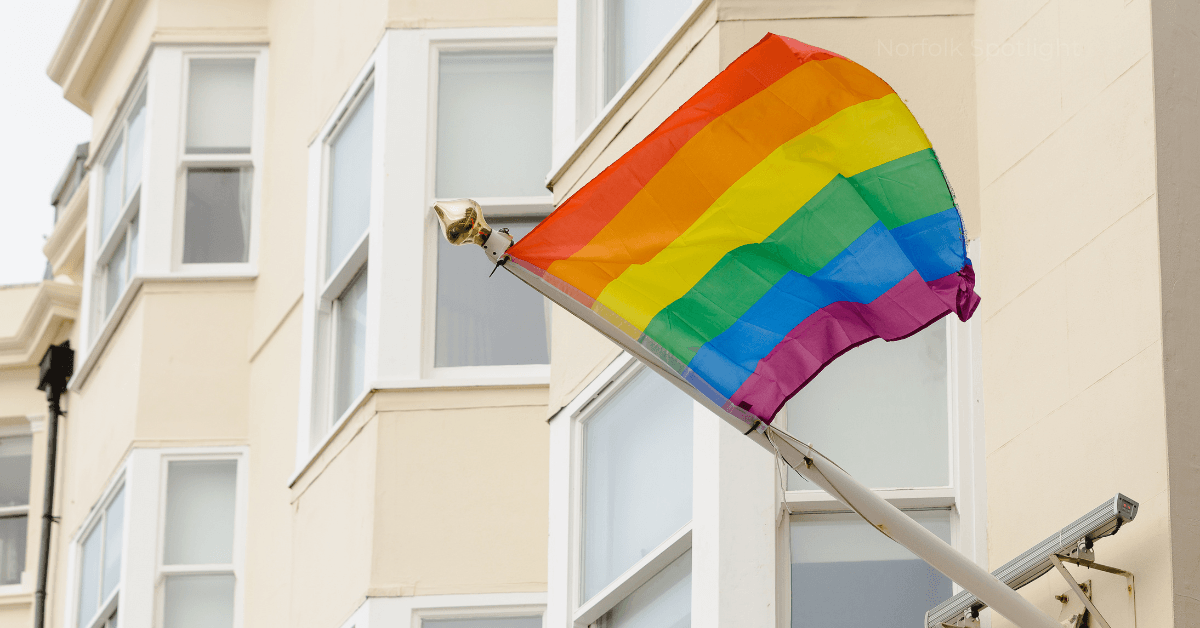
There is no polite unanimous answer to this one.
For some residents, a Pride flag outside a council building is a simple message: LGBTQIA+ people belong here, and their local authority is prepared to say so in public.
For others, the principle is just as simple: council buildings should fly official flags, not flags linked to campaigns, causes or political arguments.
That disagreement has become more visible in Norfolk this summer. Reports in June 2026 said Norfolk County Council had removed the Ukrainian flag from its headquarters under a new approach to flag flying, with Pride flags also affected.
The change followed the arrival of a Reform UK administration at county level.
It has put a familiar question back in front of residents: is refusing to fly a cause-related flag an act of neutrality, or a political decision in itself?
What is the argument for flying Pride flags?
The strongest case is that public bodies are not just collections of offices and procedures.
They are the places where residents go for help, services and representation.
A visible Pride flag can tell people who may have felt ignored or unwelcome that their council recognises them as part of the community.
That is the argument behind Norwich Pride, whose stated mission is for everyone to feel safe and proud to be themselves.
Its 2026 march begins outside Norwich City Hall before travelling through the city centre to Chapelfield Gardens.
The organisers describe the event as free, open to anyone and attended by more than 20,000 people.
Supporters also argue that councils already use flags to mark shared values and public causes.
Norwich City Council held a flag-raising ceremony for Commonwealth Day at City Hall in March 2026.
The Ukrainian flag has also been flown at public buildings across Norfolk during the war, including at South Norfolk Council’s headquarters, where the council said it was showing solidarity and support.
From this perspective, a Pride flag is not party-political campaigning.
It is a public statement about inclusion, equality and safety.
What is the argument against?
The counterargument is not necessarily opposition to LGBTQIA+ residents or to Pride itself.
It is about institutional boundaries.
A council serves residents with many different views.
If it flies one cause-related flag, critics ask, why not every cause?
What happens when requests arrive for flags linked to a political movement, a protest campaign, a foreign conflict or a contested issue?
Who decides which causes count as inclusive and which are too political?
There is also a concern about the difference between a council supporting residents and a council appearing to endorse a particular organisation, campaign or interpretation of a live debate.
A public building carries institutional weight.
A flag on a private shop, community centre or home is personal expression.
A flag on a council building can look like official policy.
Those who favour a more neutral approach may prefer councils to fly the Union flag, the St George’s flag, the Norfolk flag, civic flags and flags required for national or ceremonial occasions.
They may still support Pride events, equality duties and anti-discrimination work, but believe those should be demonstrated through services and decisions rather than symbols on flagpoles.
Is neutrality really neutral?
This is where the argument becomes more complicated.
Removing a Pride flag can be described as refusing to take sides.
But residents who see the flag as a welcome signal may experience its removal as a message too. The same applies to a Ukrainian flag:
taking it down does not automatically mean a council supports Russia, but it does change what the building communicates to people who pass it.
Norfolk Constabulary has previously noted that flying a nation’s flag is not, by itself, illegal, and that decisions about flags on public street furniture belong to the relevant local authority or highways body.
In other words, this is primarily a question of policy, judgement and public confidence rather than a straightforward legal requirement.
The practical question for councils is whether they can create a clear, consistent policy.
That might mean official flags only.
It might mean a published calendar of recognised events.
It might mean a separate community flagpole, so cause-related flags can be displayed without suggesting that every council decision is tied to the cause represented.
A local place to have the argument
If you want to carry on the debate somewhere less formal than a council chamber, Home Cafe at 102 Thorpe Road, Norwich, lists a full English breakfast at £12.40, a small bacon roll at £3.95 and a latte at £3.40.
Its menu also includes vegetarian options such as Greek yoghurt with honey, banana and muesli for £3.90, alongside baguettes, wraps and hot drinks.
That is not a recommendation or an endorsement of the café’s views.
It is simply a useful local meeting point if your version of civic debate works better over breakfast than beneath a flagpole.
The real test for Norfolk councils is not whether every resident agrees with a particular flag.
They never will. It is whether the policy is clear, consistent and applied fairly and whether residents can understand why one symbol is welcomed while another is refused.
So, should Norfolk council buildings fly Pride flags and other cause-related flags?
Or should they stick to official flags only?
Continue ReadingSilence At Sandringham: What Happens Next? The Five-Minute Check Before A Norfolk Summer Drive £250,000, £350,000 Or £500,000: What Does Your Money Actually Buy In Norfolk?
|
0 Comments
Join the conversation
Be the first to comment
Share your thoughts above.