The Household Bill To Check First Before Autumn |
Energy is the biggest target for most households, but broadband and insurance can be close behind if your deal has expired without you paying attention. |
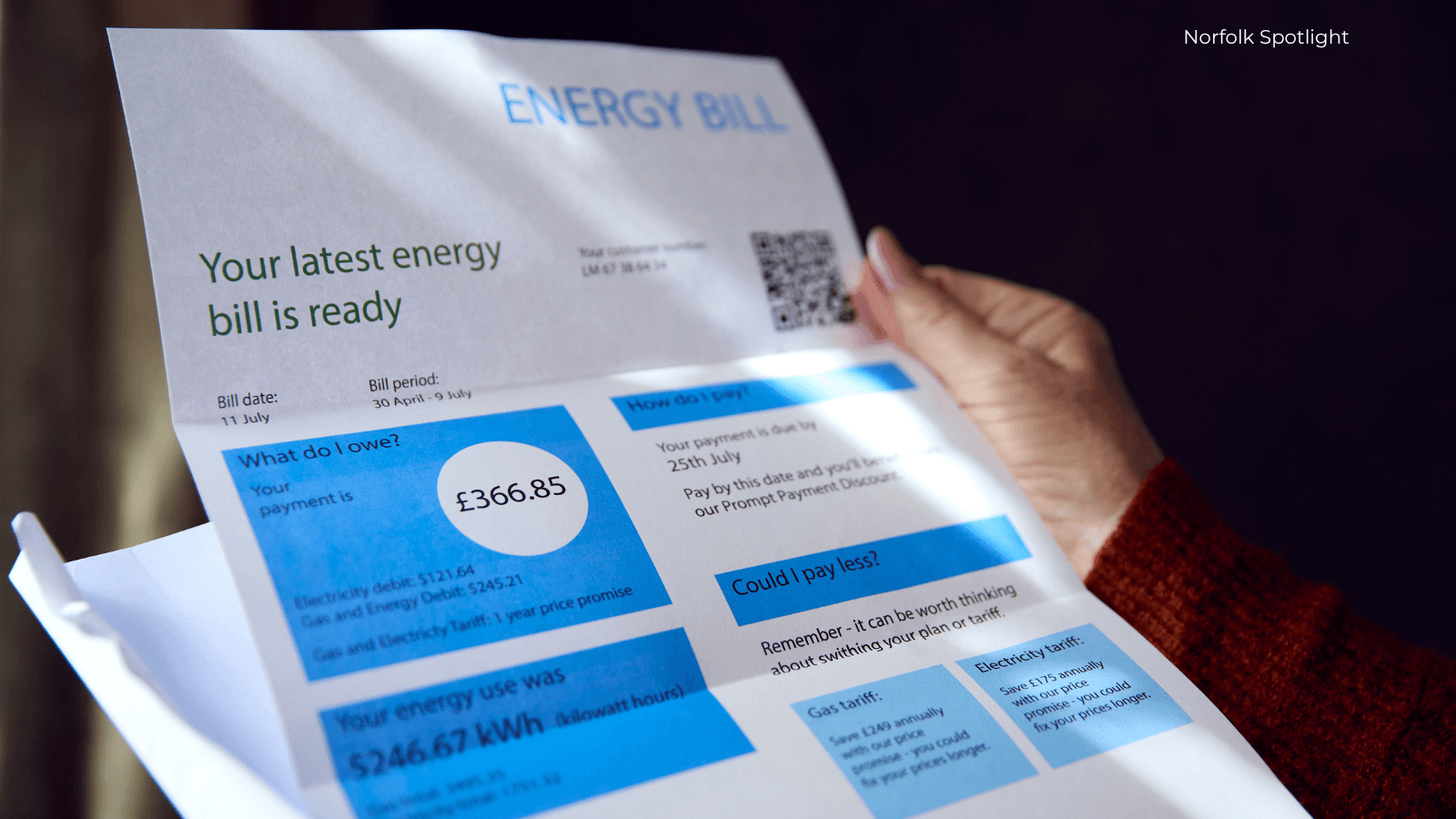
If you only check one household direct debit before autumn, start with your energy bill.
That is where the biggest realistic saving is most likely to sit. Ofgem’s cap for 1 July to 30 September 2026 puts a typical dual-fuel household paying by Direct Debit at £1,663 a year.
Your bill may be higher or lower, depending on how much energy you use, where you live in Norfolk and the deal you are already on.
Don’t just look at the monthly payment. Check the tariff, unit rates, standing charges and payment method.
A lower direct debit can simply mean your account is building up a shortfall.
The number worth chasing is the total annual cost for your household.
Broadband comes next, especially if your introductory deal has ended.
MoneyHelper suggests checking the first-year cost, asking your current provider for a better deal and looking for exit charges before switching.
A faster package is not much use if it costs more than you need or cannot actually be ordered at your home.
That last bit is particularly Norfolk-shaped.
The revised CityFibre Project Gigabit contract covers about 32,670 premises in the county, with 12,510 recorded as built in the May 2026 snapshot.
Those figures show progress, not a promise that fibre is ready at your postcode.
Check the address before cancelling anything.
Insurance is the third review to put in the diary.
At renewal, compare the price instead of accepting the automatic renewal.
Check the cover, excess and exclusions alongside the premium.
There is no single Norfolk saving figure: a home in Norwich, a car kept in a rural village and a household with different claims histories will not receive the same quote.
Transport can cut costs too, but it is less universal.
Participating English bus services remain covered by the £3 single-fare cap through 2026.
In Norfolk, the saving depends on having a route that goes where you need it, at the time you need it.
A direct debit review cannot create a bus service.
So the order is simple: energy first, broadband next, insurance at renewal.
Then check transport only if a real alternative to a car exists.
Review the annual saving, switching fees and what you would lose before cancelling anything.
Which Norfolk bill have you found hardest to change because of your postcode, route or existing contract?
Tell us the place and the problem, and it could shape a follow-up with one of our experts. |
0 Comments
Join the conversation
Be the first to comment
Share your thoughts above.