
Norfolk Unfiltered: When Does A Diversion Become Someone Else's Daily Nightmare? |
A road closes to fix a problem but the yellow-signed diversion can dump weeks of extra traffic onto streets that were never built for it.
Should councils and highways teams do more to protect the places that become the unofficial ‘new main road’? |
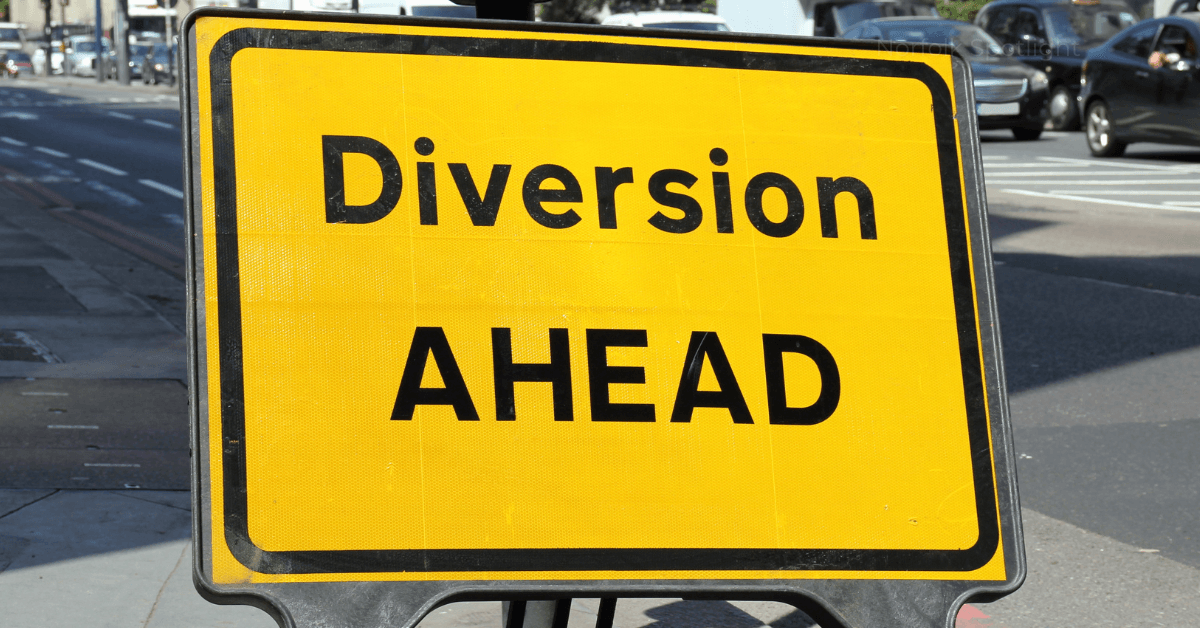
One road closure is meant to be temporary.
But the diversion often isn’t.
In Norfolk, a set of yellow signs can turn a quiet village approach, a narrow lane, or a residential rat-run into a constant stream of HGVs, school-run traffic and frustrated drivers searching for shortcuts.
For the people who actually live there, it can feel like the closure didn’t remove the problem it simply moved it.
This week’s Unfiltered question is simple:
Should councils and highways teams do more to protect communities that absorb weeks or months of diverted traffic during major roadworks?
Because “official diversion” can mean very different things depending on where you’re standing.
If you’re on the closed road, it’s an inconvenience.
If you’re on the diversion route, it can become your daily background noise: heavier traffic, vibration, blocked driveways, near-misses at pinch points, and a very different feel outside your front door.
And even if the diversion is formally planned, local experience can be that the reality is shaped by sat-nav reroutes and driver behaviour with extra traffic spilling beyond the signed route into whichever side roads seem quickest.
So what should be standard when a diversion lasts beyond a few days?
Some reader questions we want your help answering:
• Should councils be quicker to add temporary speed controls, extra signage, or physical measures when a diversion starts causing problems?
• Should there be routine monitoring (traffic counts, speeding checks, HGV compliance) on diversion routes — and a clear trigger for action?
• Should residents get a named contact and a promised response time for diversion-related problems?
• Should there be a stronger test before an “unsuitable” route is signed particularly where there are schools, tight bends, weak verges, or frequent pedestrian crossings?
• If a closure is expected to run for weeks, should there be a published “diversion impact plan” showing what will be done to protect the places carrying the load?
This is not a call to stop necessary repairs. Roadworks have to happen.
It’s a call to be honest about who pays the day-to-day price when they do.
Now we need Norfolk’s map of where this is happening.
Nominate the Norfolk road, village or neighbourhood you think is being hit hardest by diverted traffic or where repeated closures keep pushing the same problem onto the same streets.
Tell us:
• Where it is (road name and nearest village/town)
• What the closure/diversion is linked to (if you know)
• What’s changed on the ground (noise, speeding, HGVs, parking, safety)
• How long it’s been going on (even roughly)
• What, if anything, has helped
We’ll use nominations to decide what to report next and what to put to the people who plan and sign off diversions. |
0 Comments
Join the conversation
Be the first to comment
Share your thoughts above.