
Norfolk Unfiltered: Are Some Villages Just Expensive Housing Estates With A Nice Sign? |
A village does not need a shop on every corner. But when the homes grow and the everyday places disappear, what is left holding the community together? |
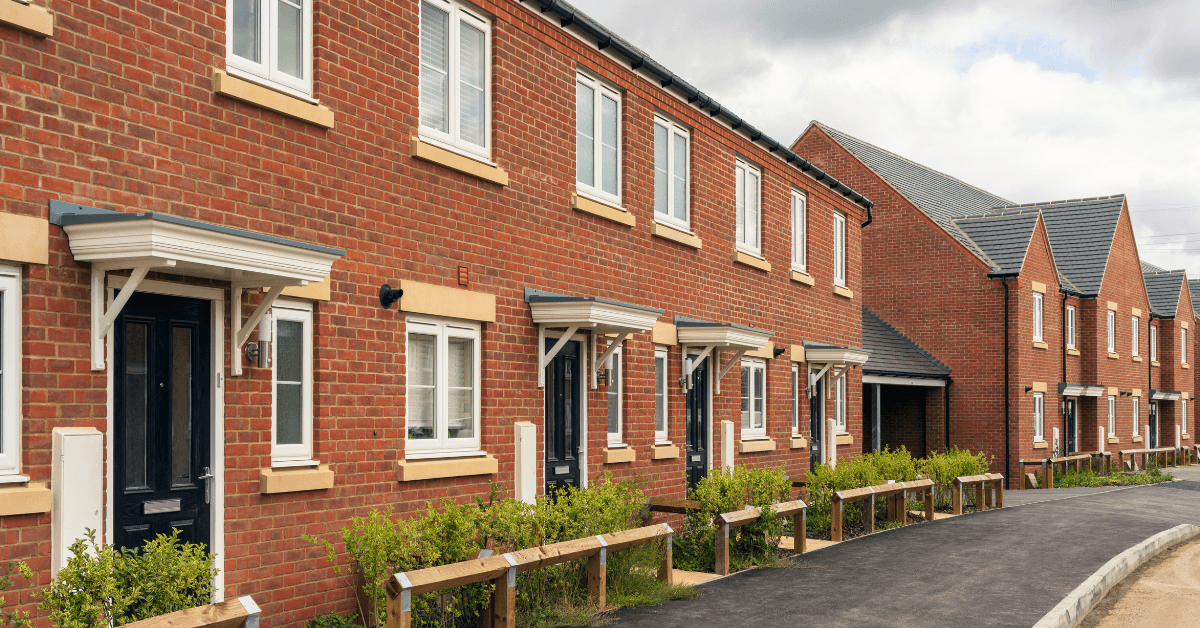
A village name. A church tower. A few handsome houses. Then no shop, no pub, a bus timetable requiring spiritual faith and every journey beginning with: “We’ll have to drive.”
That is the uncomfortable version of the Norfolk village story.
A place can look prosperous from the road while becoming harder to live in day to day.
The question is not whether villages should change. They must.
People need homes, young families need somewhere to live and existing communities need to avoid becoming places where only older residents or wealthy newcomers can afford to stay.
The sharper question is what has to arrive alongside the houses and what must not be allowed to disappear.
What counts as a functioning community?
There is no official pass-or-fail test for village life. A shop is useful, but not every village can support one.
A pub can be a social anchor, but not every pub survives.
A school may be central to one settlement and absent from another.
A village hall, sports ground, church, bus stop, GP surgery, post office counter or community group may matter more in a particular place.
For this article, a functioning community means more than a collection of homes.
It means residents have some realistic way to meet, access everyday essentials, get around and take part in local life without treating the car as the answer to everything.
That is a value judgement, not a planning definition.
But it is a useful one because it shifts the conversation away from housing numbers alone.
The planning documents already recognise the problem West Norfolk’s planning policy describes village halls, pubs, shops, allotments and churches as important community facilities, particularly in rural settlements.
It also says new development should provide facilities for an expanding population, with more than 11,000 new homes planned across the borough over the plan period to 2036.
That is the principle in black and white: more residents create more need.
A new estate is not separate from the village simply because it has a different housebuilder’s sign at the entrance.
West Winch shows the scale of the challenge.
The council describes its Strategic Growth Area as capable of delivering up to 4,000 new homes, alongside employment space, commercial areas, community resources, health facilities, education, play areas, open space and transport links.
The language matters. The ambition is not just to build a large number of houses beside an existing village.
It is to integrate those homes with the existing community and create a place where new and established residents can share facilities.
Whether that works in practice will depend on delivery, timing and whether the facilities are convenient enough to use.
A promised community centre that arrives years after the houses is not the same thing as a living village centre from the start.
South Norfolk is taking a similar approach at a smaller scale.
Its Village Clusters Housing Allocations Plan proposes around 1,200 homes across village clusters by 2038.
The plan is based largely on primary-school catchments, while access to local services, road suitability and flood risk are among the factors used to assess sites.
That does not mean every allocated village has a shop, pub, doctor and regular bus.
It does mean the council is acknowledging that the location and scale of housing should be considered alongside the services already available.
North Wootton offers a warning from the other direction
The issue is not only what new developments promise. It is also what established villages lose.
In its examination of the North Wootton Neighbourhood Plan, the borough council recorded that the village shop had closed and could no longer be protected as a community facility.
The report also noted that part of the former House of the Green pub site including its car park, garden and play area, as well as a previous bowling green had become part of a housing development and could not now be protected as a community facility.
That does not prove that housing caused every loss, or that every former pub site should remain untouched.
It does show how quickly a village can lose the practical spaces that gave people reasons to meet.
A house is not a community facility simply because someone lives in it.
A green space is not automatically a meeting place because it can be seen from a pavement.
A bus stop is not meaningful transport if the service does not take people where they need to go at useful times.
So what should a village be expected to have?
The answer will vary, but four tests seem reasonable.
First, there should be somewhere to meet that is not a private home.
That might be a village hall, pub, school, church, sports club or community-owned space.
Second, residents should have at least some access to everyday essentials locally or through a genuinely usable transport link.
That could be a shop, post office outreach service, regular bus, mobile service or a nearby settlement connected by safe walking and cycling routes.
Third, new housing should help support local life rather than simply add demand to facilities already under pressure.
If a school, road, surgery or bus service has limited capacity, that should be part of the conversation before the estate is occupied.
Fourth, the community should have a say in what is protected and what is created.
North Norfolk’s community-led housing guidance points to examples such as community shops, halls, pubs, play areas and open spaces being owned or managed locally.
That is not a magic solution, but it recognises that community assets often survive because people feel responsible for them.
The real dividing line
A village does not become fake because it has new houses.
Nor does it become successful because house prices are high and the verges are neatly cut.
The dividing line is whether people can build a life there rather than merely sleep there.
That means planning for the ordinary moments: buying milk, meeting a neighbour, taking a child to school, getting to a doctor, joining a club, watching a match, sitting in a pub, attending a village event or asking for help without needing a 20-minute drive first.
Some Norfolk villages will never have all of those things.
They can still be real communities.
But if housing growth is treated as success while every shared space, local service and easy connection is treated as optional, the village risks becoming little more than a name on a sign.
What is the one thing a Norfolk village cannot lose without stopping feeling like a real community?
1. About West Winch Strategic Growth Area
Up to 4,000 new homes at West Winch, plus proposed employment, commercial, community, health, education, play, open-space and transport provision; stated aim of integrating new homes with the existing village.
2. South Norfolk Village Clusters Housing Allocations Plan
3. Local Plan Review Pre-Submission Stage 2021: Social and Community
4. North Wootton Neighbourhood Plan Report
5. Community-led housing |
0 Comments
Join the conversation
Be the first to comment
Share your thoughts above.